
5 Nintendo Switch Problem Solving Games for Kids
Discover 5 Nintendo Switch problem solving games for kids, featuring creative puzzles, teamwork, and brain challenges for engaging screen time.
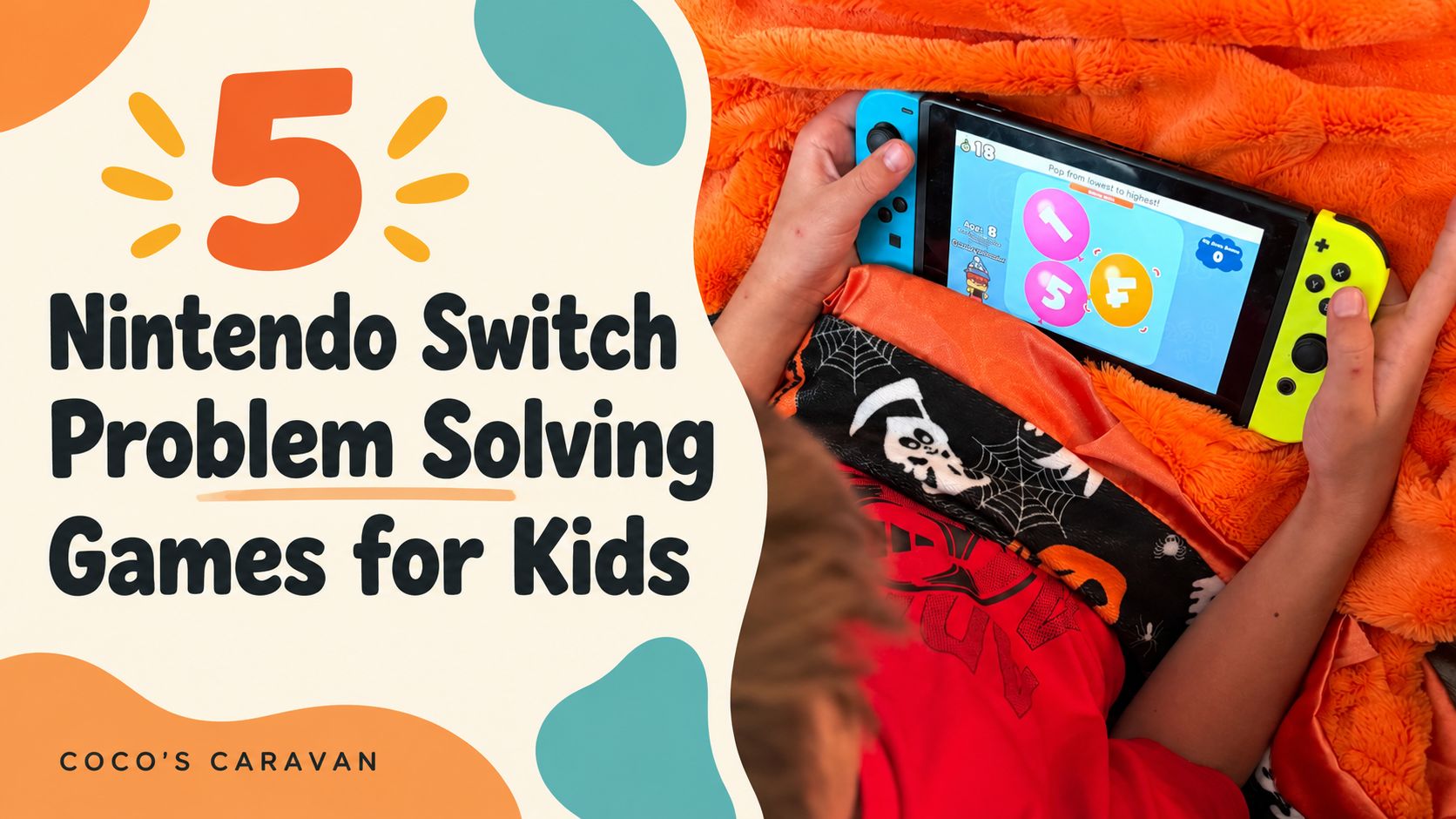
Why Choose Nintendo Switch Problem Solving Games for Kids?
I love Nintendo Switch problem solving games for kids because they give kids a reason to think, try different ideas, and work through challenges while having fun. If you’re curious about the positives, I’ve shared more about the benefits of video games for kids. Choosing games is just one piece of the puzzle my healthy gaming guide for parents also covers boundaries, online safety, and finding a balance that works for your family.
Introduction
Looking for Nintendo Switch problem solving games for kids? These five games give kids opportunities to solve puzzles, get creative, and try different ideas when something doesn’t work. From building their own worlds to tackling challenges together, there’s something here for a variety of interests and skill levels.
1. Big Brain Academy: Brain vs. Brain
Big Brain Academy: Brain vs. Brain turns memory, number, and logic challenges into quick, playful activities. Kids practice spotting patterns, remembering details, and thinking through answers. Everyone can play at their own difficulty level, so kids and adults can compete together without tackling equally difficult questions!
I also prefer this over many tablet games because there are no pop-up ads interrupting play, and the main activities can be enjoyed offline without chatting with strangers. The game does have optional online features, so keeping the Switch disconnected from the internet lets kids stick to offline play.
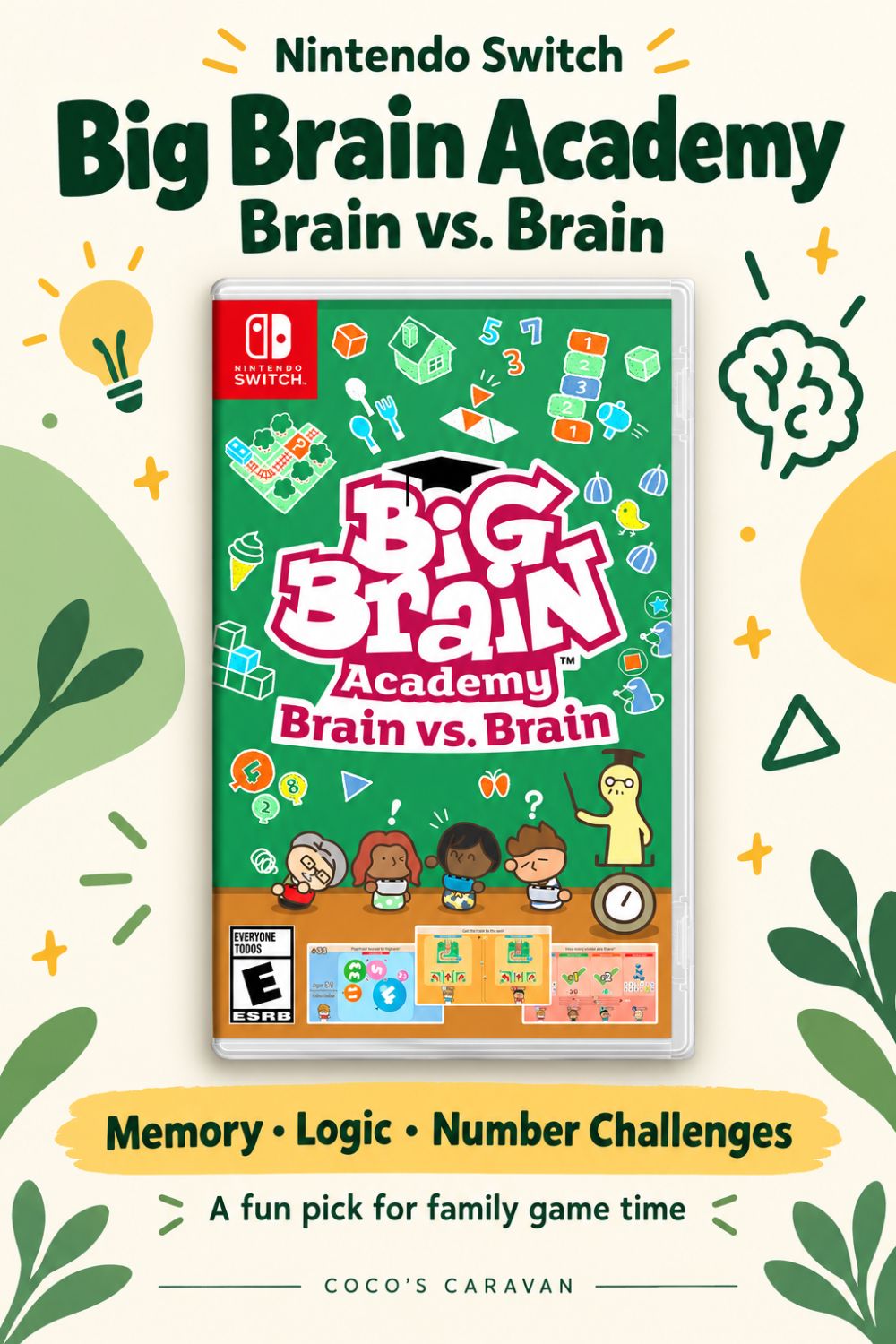
Suggested ages: 6 and up, depending on your child’s abilities; younger kids may enjoy playing with help.
Official rating: ESRB Everyone, with mild cartoon violence.
2. Snipperclips Plus: Cut it out, together! Teamwork
Snipperclips Plus is a playful puzzle game where players cut their paper characters into different shapes to complete challenges. Kids have to talk through their ideas, figure out how shapes fit together, and test different solutions. If something doesn’t work, they can reshape their characters and try again!
For example, a puzzle might challenge players to get a basketball into a hoop. Together, they have to decide what shapes and movements will help them get it there. I like that the focus is on working together to solve a problem it’s a fun option for siblings or parents and kids to play side by side.
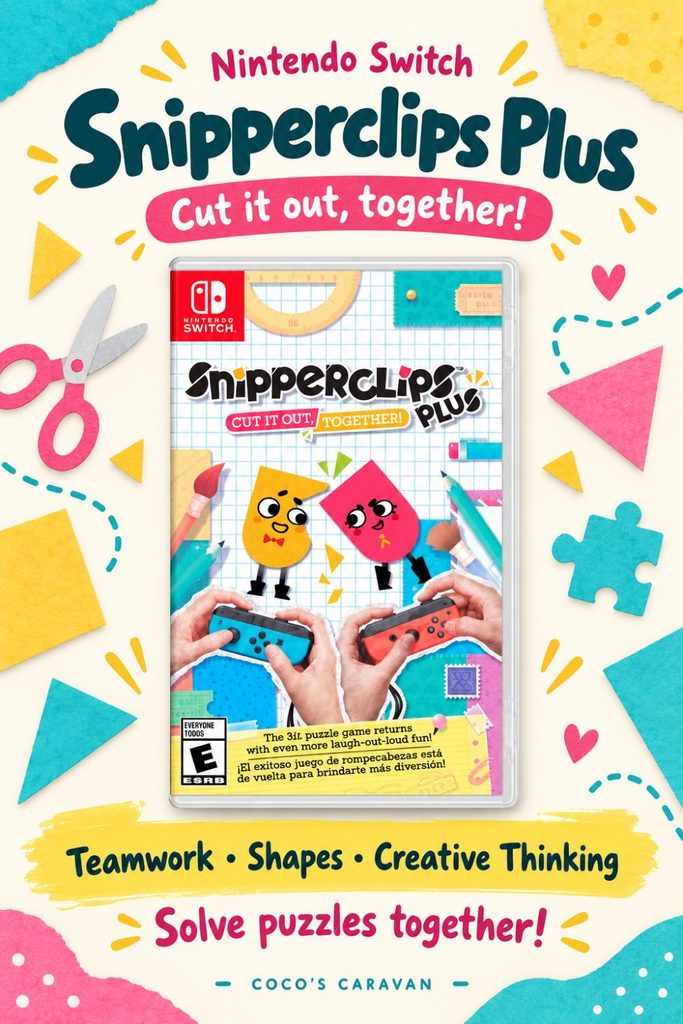
Suggested ages: 6 and up with a partner; younger kids may need help with trickier puzzles.
Official rating: ESRB Everyone.
3. Captain Toad: Treasure Tracker Finding Hidden Paths
Captain Toad: Treasure Tracker turns little miniature worlds into puzzles! Kids rotate the camera to look around corners, discover hidden paths, and figure out how to reach treasure. It gives them opportunities to practice spatial reasoning thinking about how paths and objects connect when viewed from different angles.
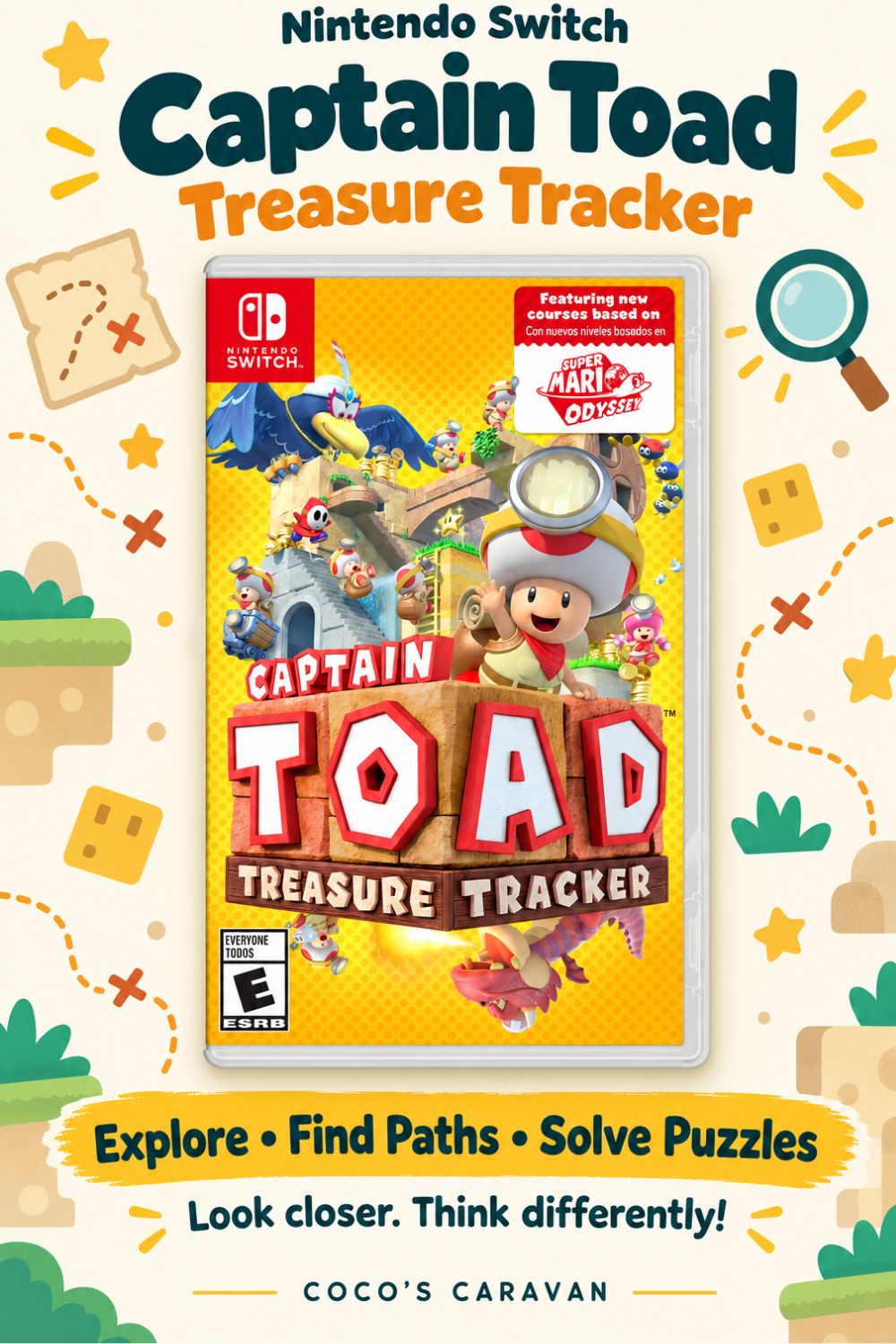
For example, a treasure might seem impossible to reach until they turn the camera and spot a passage behind a wall. I like that the game encourages kids to slow down, look closely, and try a different perspective when they get stuck.
Parent note: There are enemies and mild cartoon violence. Younger players may need help controlling the camera or working through trickier puzzles.
Suggested ages: Around 6 and up, depending on your child’s experience; younger kids may enjoy playing together with a parent.
Official rating: ESRB Everyone, with mild cartoon violence.
4. Pikmin 4 Planning and Problem Solving
Pikmin 4 puts players in charge of tiny plantlike creatures who help them explore, collect treasure, and overcome obstacles. Different types of Pikmin have different abilities, so kids have to decide which ones to use, where to send them, and how to get everyone safely through a challenge.
For example, red Pikmin can handle fire, while blue Pikmin can travel through water. Players have to look at what’s ahead and choose the right team for the job. Their rescue pup, Oatchi, also helps carry objects and break through obstacles!
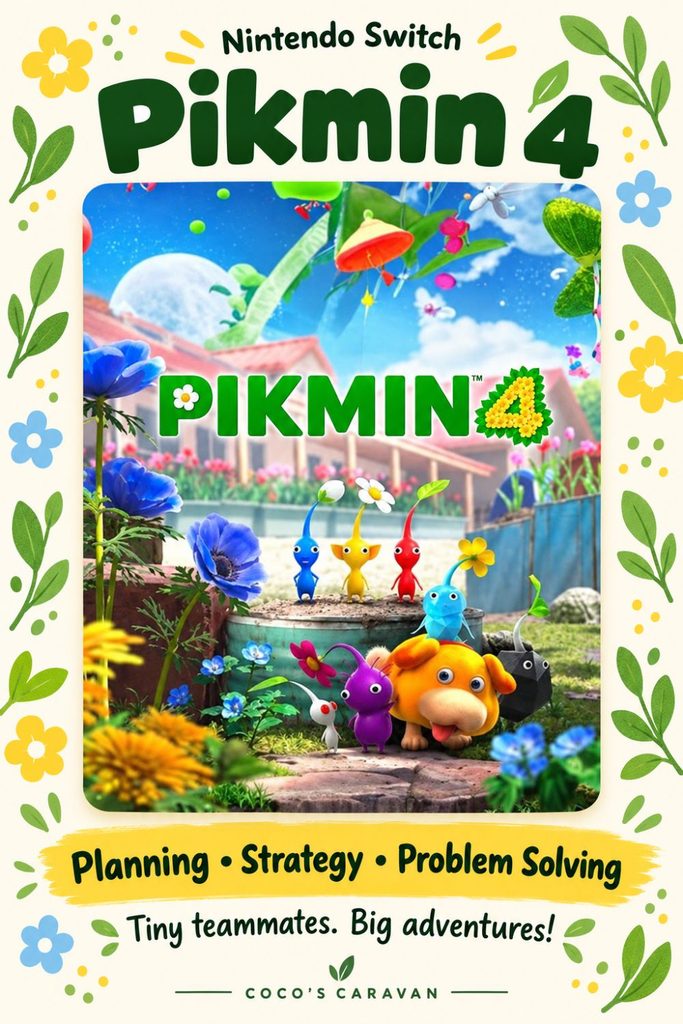
I like that the game gives kids a reason to plan ahead and adjust when an idea doesn’t work. It’s about more than moving through a level—they’re figuring out how to use their team and time thoughtfully.
Parent note: The game includes battles with creatures, and Pikmin can be eaten or lost. Younger kids may need help with reading, managing their team, and handling those moments.
Suggested ages: 10 and up; younger players may enjoy it with parent guidance.
Official rating: ESRB Everyone 10+, with fantasy violence and comic mischief.
5. Scribblenauts Mega Pack Words and Creative Solutions
Scribblenauts Mega Pack makes words part of the puzzle! Players enter the names of objects into a magical notebook, then use those objects to help solve challenges. The game recognizes thousands of words, giving kids plenty of opportunities to experiment with vocabulary and creative ideas.
What I like about this concept is that kids have to ask, “What could help here?” instead of simply looking for the right button to press. If one idea doesn’t work, they can think of a different object and try another approach. It’s a playful way to connect words with their meanings while exploring different solutions.
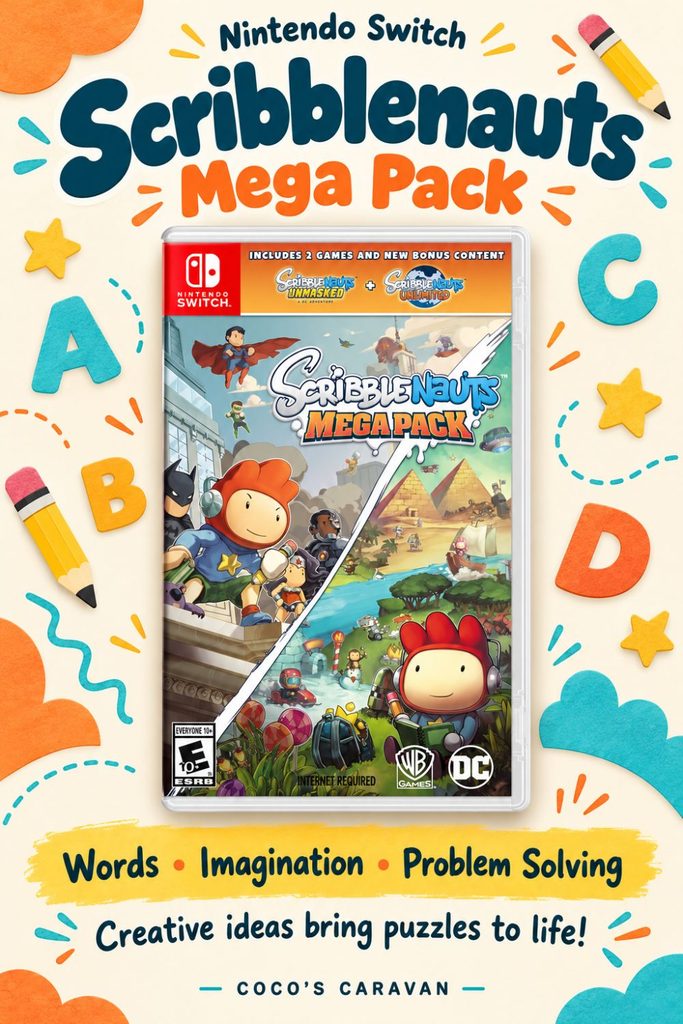
Parent note: Younger readers may need help reading clues and spelling the objects they want to create. Playing together gives you a chance to talk through their ideas without immediately giving them the answer.
Suggested ages: 10 and up for more independent play; younger children may need reading and spelling support.
Official rating: ESRB Everyone 10+, with cartoon violence and comic mischief.
Extra Game Older Kids: The Legend of Zelda: Breath of the Wild Creative Problem Solving
Breath of the Wild is an adventure game with plenty of opportunities to stop and think. Inside shrines, players solve puzzles by moving objects, experimenting with physics, and figuring out how different tools work. Exploring the world also takes planning players need to consider their route, stamina, and supplies before tackling a mountain or reaching a new area.
What makes this game stand out is that many challenges have more than one solution. Players might climb around an obstacle, use objects to create a path, or try a different tool. I like that it encourages experimenting rather than simply following instructions.
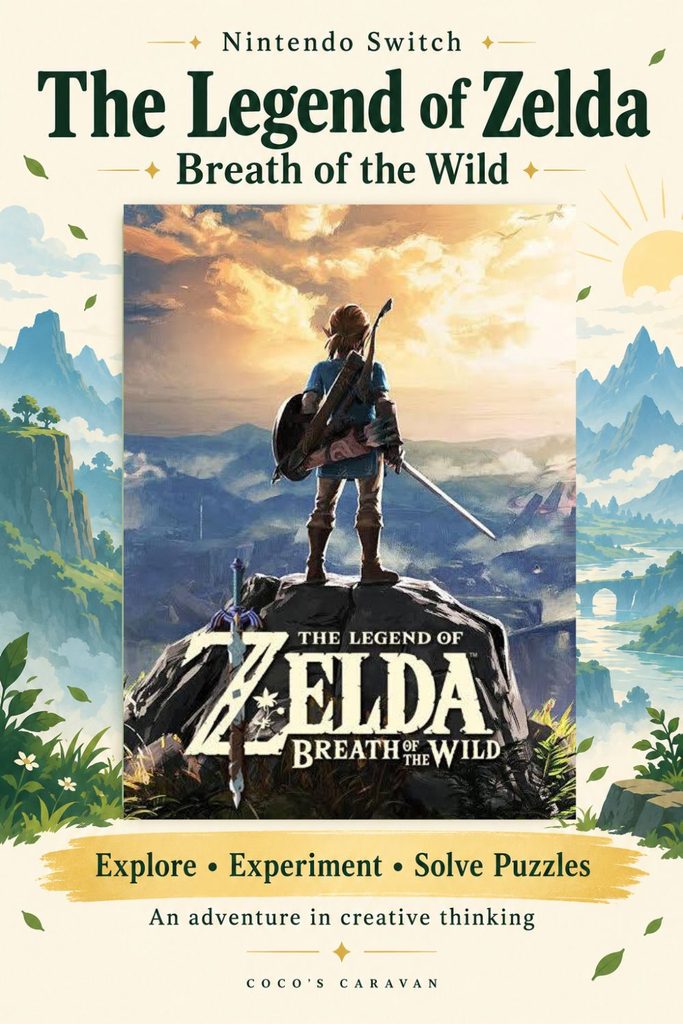
Parent note: This is a more complex game than the other puzzle games on this list. It includes fighting enemies with weapons, and younger players may need help with the controls, reading, and tougher challenges.
Suggested ages: 10 and up, depending on your child’s experience and comfort with combat.
Official rating: ESRB Everyone 10+, with fantasy violence, mild suggestive themes, and use of alcohol.
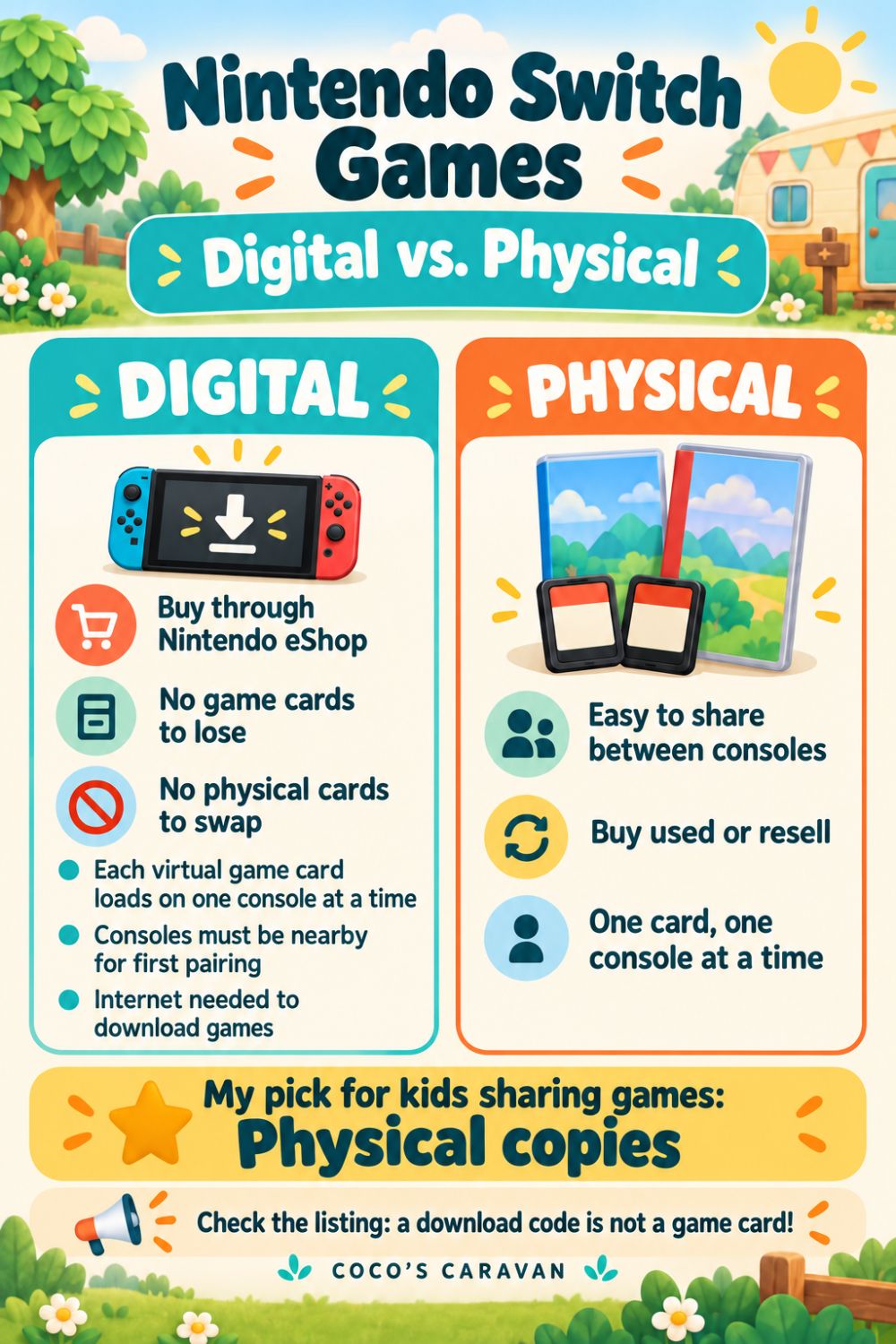
Where to Buy Nintendo Switch Games: Digital vs. Physical
You can buy digital games through the Nintendo eShop or find physical game cards at stores like Target, Walmart, Amazon, and GameStop. Just check the listing some retailers sell download codes instead of physical cards!
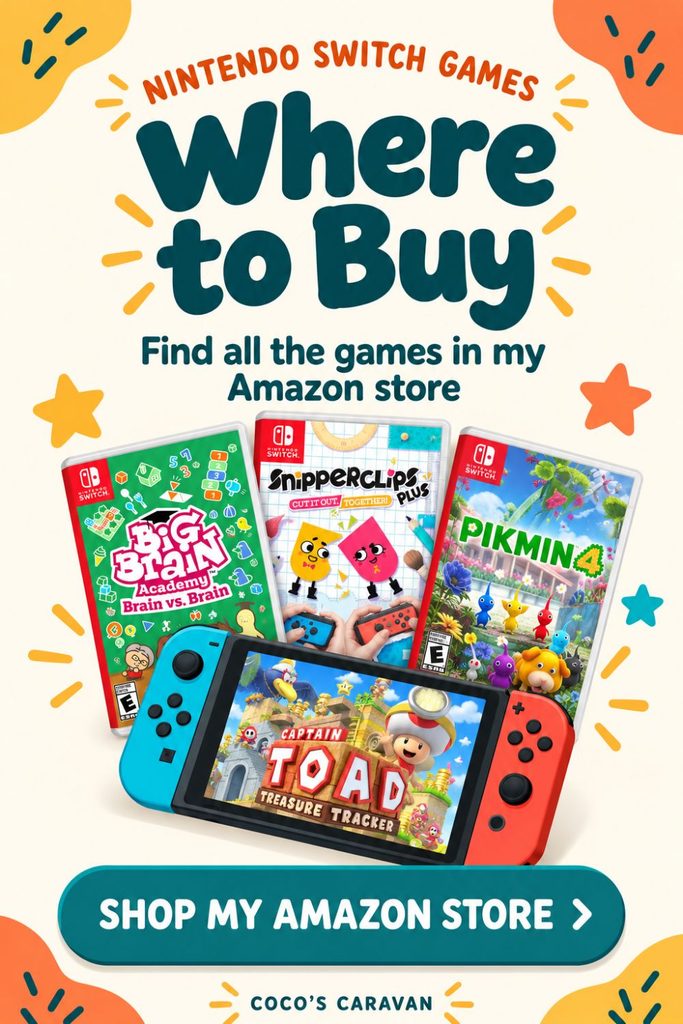
Digital games are convenient because they’re stored on the console, so there’s no tiny game card to lose or swap out. Physical games are easy to lend, buy used, or resell.
For kids who will be sharing games, I prefer physical copies. They can move the game card from one Switch to another without figuring out digital sharing settings. Just remember that one card can only be used on one console at a time.
Conclusion
These Nintendo Switch problem solving games for kids make room for creativity, teamwork, and trying different solutions all while having fun. Pick one that matches your child’s interests and try playing together!
Need help setting boundaries around gaming? My parent’s guide to healthy gaming shares our family’s screen time rules, online safety tips, and how we keep gaming balanced.