
Video Games and Kids: A Parent’s Guide to Healthy Gaming
Video games and kids: Learn how to create healthy gaming habits with tips on screen time limits, online safety, choosing age-appropriate games, and making video games a positive experience at home.
Table of Contents
My Personal Experience with Video Games
I’ve loved video games for as long as I can remember. As a kid, they were more than just entertainment they were a healthy escape and something that helped me during some difficult seasons of anxiety. Focusing on a game gave my mind something positive to do and helped me calm down. I still enjoy playing video games today, and some of my favorite memories now are playing alongside my boys. Because of my own experience, I wanted to share a more positive perspective on video games and how, with the right boundaries, they can be a fun and beneficial part of childhood.
Benefits of Video Games and Kids
Video games and kids can actually have a lot of positive benefits for kids when used intentionally and with healthy boundaries. They can encourage problem-solving, creativity, reading, teamwork, perseverance, and even help kids stay connected with friends and family. In our home, video games have become something we enjoy together as a family rather than something we fear. If you want to learn more about how we manage gaming in our home, the types of games we allow, online safety, and tips for creating healthy gaming habits, you can read the full blog post HERE.
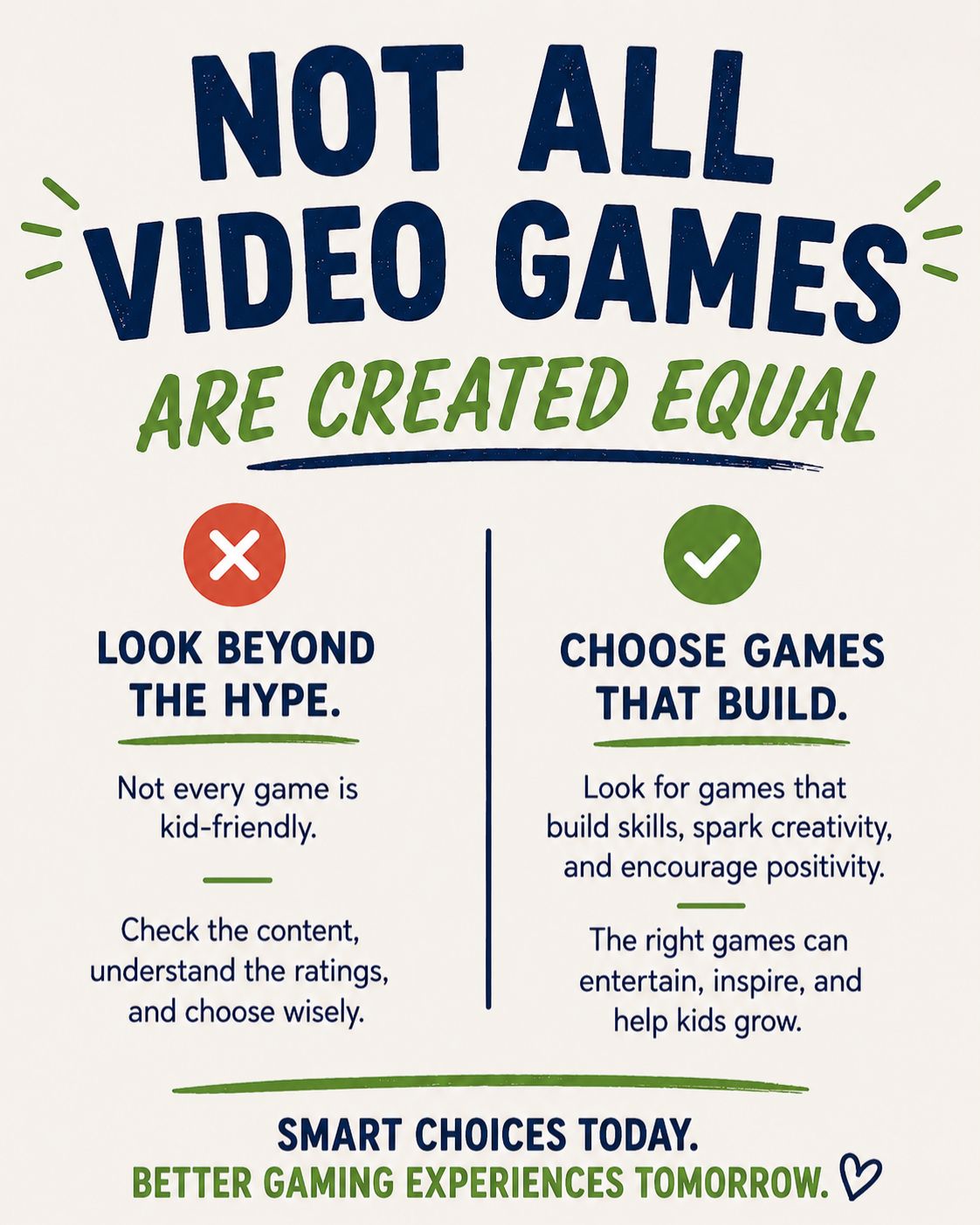
Not All Video Games Are Created Equal
One of the most important things to understand as a parent is that not all video games are the same. Some games are designed to encourage creativity, problem-solving, and thoughtful play. Others are built to deliver constant stimulation and quick rewards, which can make them harder for some kids to turn off.
Games That Encourage Learning and Creativity
These are the types of games I tend to feel best about in our home.
- Minecraft encourages creativity, planning, and problem-solving as kids build, explore, and work through challenges.
- Animal Crossing: New Horizons promotes creativity, goal setting, and patience in a calm, low-stress environment.
- Puzzle and strategy games help kids think critically and work through challenges step by step.
These games tend to be slower paced and require kids to actively use their minds.
Highly Stimulating Games
Some games are intentionally designed to keep players constantly engaged by offering fast rewards, bright visuals, and nonstop action.
For some kids, these games can be exciting and fun. For others, they can make it much harder to transition away from the screen and may lead to more irritability or emotional meltdowns when it’s time to stop.
Example: Fortnite
Fortnite is a Battle Royale game where players compete in fast paced matches. If they are eliminated, they can jump right into another game within seconds. That constant cycle of “just one more match” creates a steady stream of excitement and rewards, similar to how YouTube keeps serving up another video. For some kids, this can make it much harder to stop playing and transition to something else.
As a parent, I focus less on what games are popular and more on how a game affects my kids’ behavior, mood, and ability to transition when playtime is over.
Games We Personally Avoid
In our home, we avoid:
- Violent games
- Games with mature or inappropriate content
- Games that lead to meltdowns or obsessive behavior
- Games with excessive microtransactions or constant prompts to spend money
Even if a game is popular, if it negatively affects my kids’ behavior or makes it hard for them to stop playing, it’s not a good fit for our family.
Looking for Kid-Friendly Video Games You Can Feel Good About?
If you’re trying to figure out which games are actually worth your kids’ time, I put together a list of video games that my boys love and that I personally approve of. These are games that encourage creativity, problem-solving, teamwork, and fun without the excessive violence or inappropriate content found in many popular titles.
In this post, I share our favorite games for the Nintendo Switch, PlayStation, and other consoles, along with why each one has earned a place on our approved list.
👉 Read the full post here: My Approved Video Games List for Kids
Every Child Is Different
When it comes to video games, there is no one size fits all approach. Some kids can stop playing without any issues, while others have a harder time transitioning away from screens. Some children are more sensitive to overstimulation or have more addictive personalities.
That’s why the games you allow and the rules you set should be based on your child’s unique personality and needs. Healthy gaming looks different for every child.
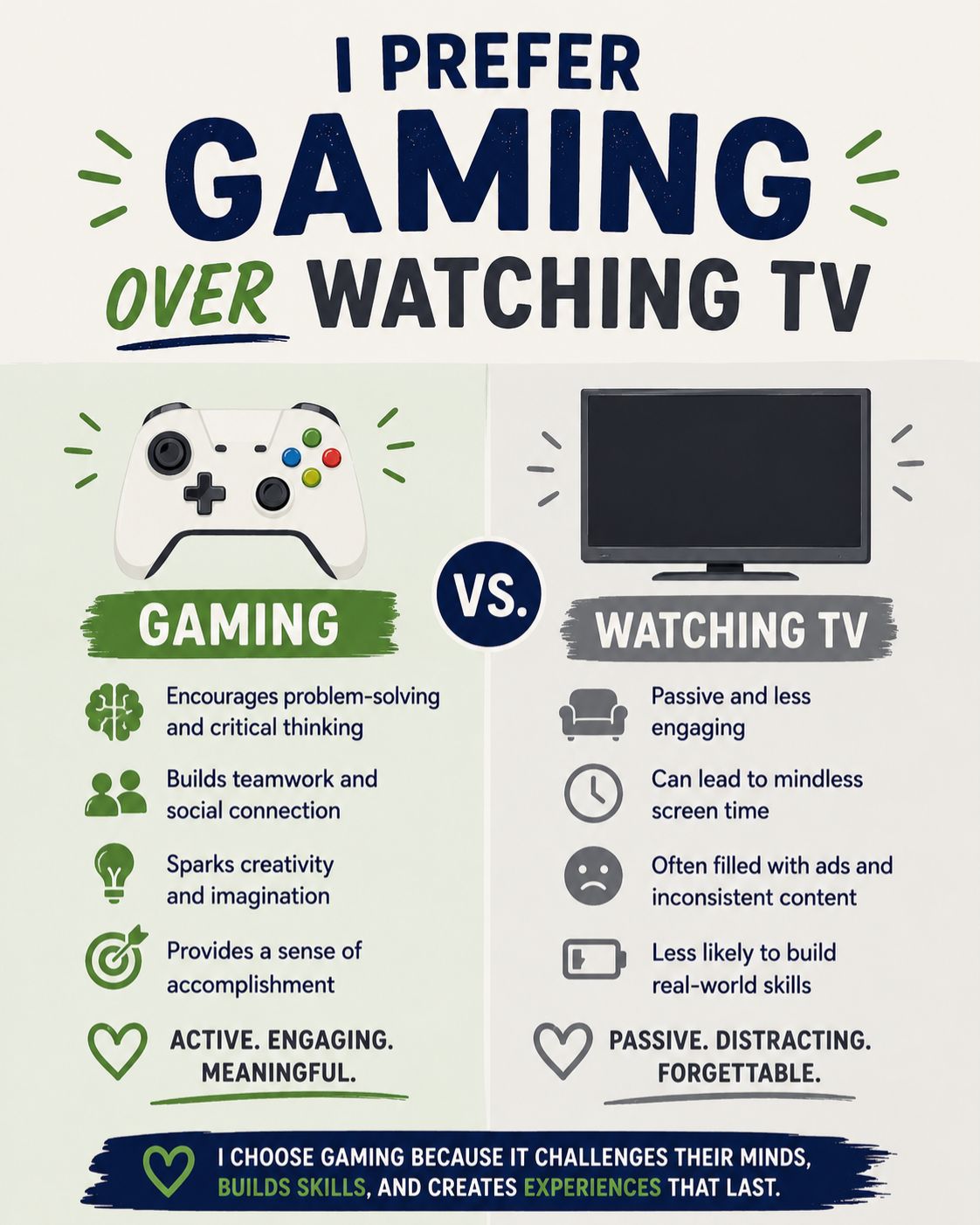
Why I Often Prefer Video Games Over Watching TV
If I had to choose between my kids playing a thoughtful video game or sitting in front of a TV show, I would usually choose the video game.
Watching TV is mostly passive. Kids sit back and consume content. Video games, on the other hand, require them to think, read, solve problems, and make decisions. Many games also encourage creativity and teamwork.
That doesn’t mean all screen time is bad, but I like that video games actively engage my kids minds instead of simply entertaining them.
How We Handle Online Safety
One of the biggest concerns parents have about video games is online safety, and this is an area where I stay very involved.
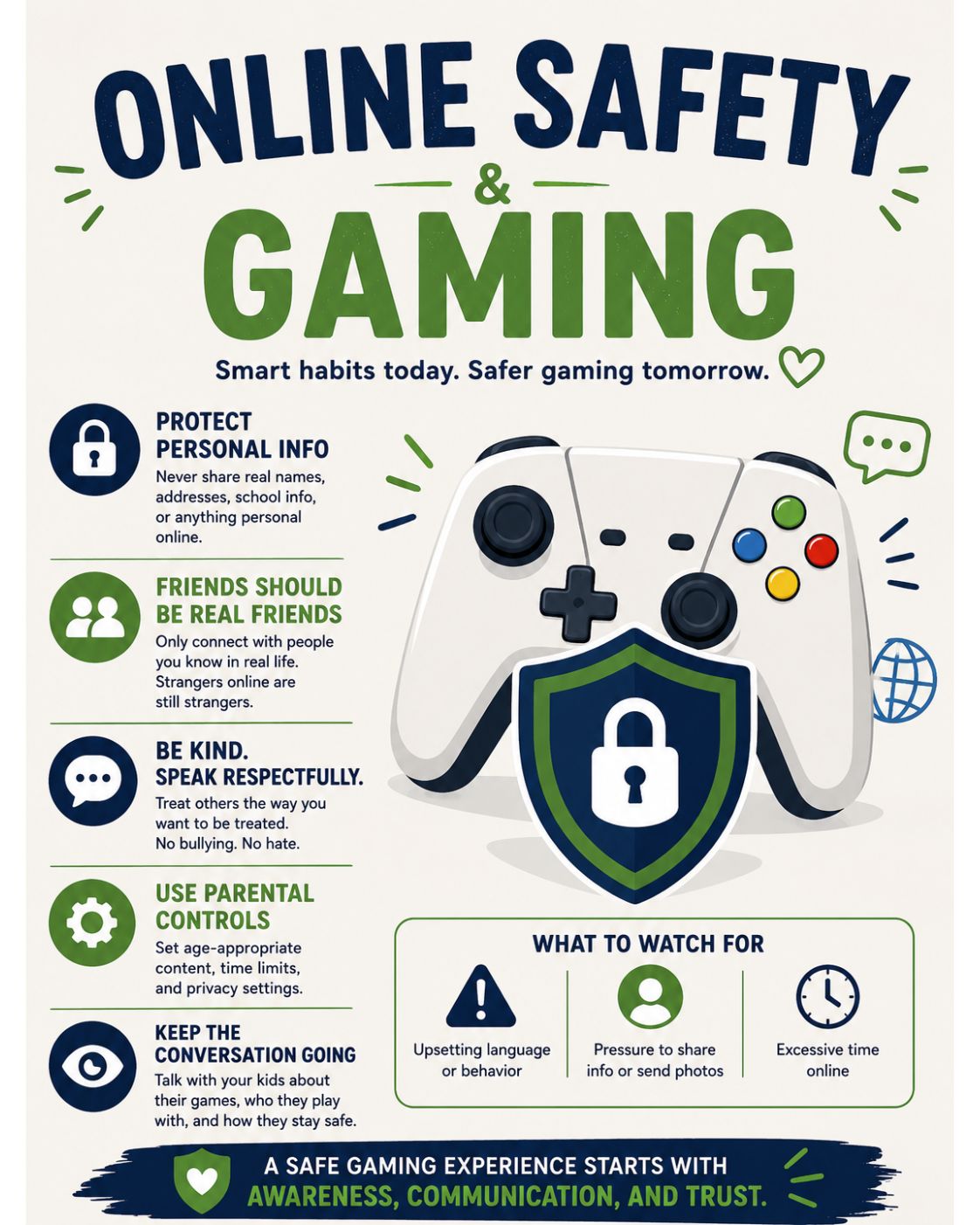
We use the Xbox Family Settings app and the Nintendo Switch Parental Controls app to manage our boys’ accounts.
These apps allow me to:
- Control who they can communicate with
- Approve all friend requests
- Prevent them from downloading games without my permission
- Set screen time limits
- Monitor what they are playing
Before I allow a new game I
- Research the game
- Watch gameplay videos if I’m unfamiliar with it
- Read reviews from other parents
- Play the game myself when possible
- Pay attention to how it affects my boys’ behavior
If a game leads to more conflict, overstimulation, or difficulty transitioning, it may not be the right fit for our family.
By staying involved and using parental controls, online gaming can be a much safer and more positive experience for kids.
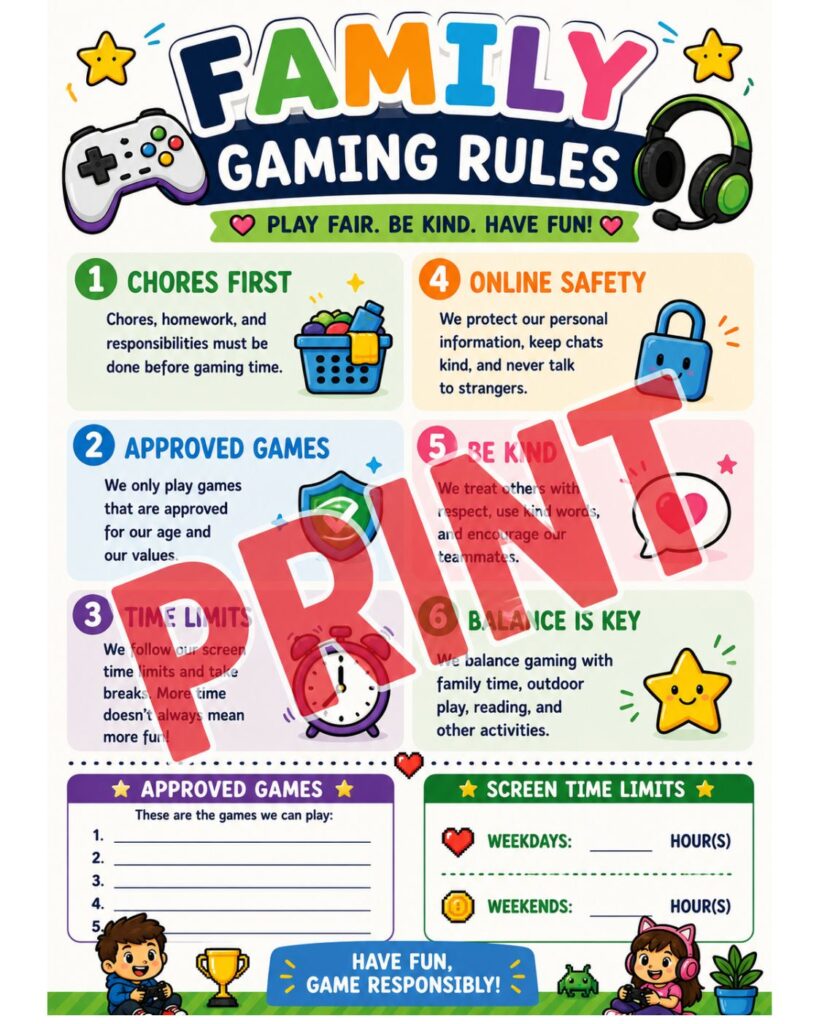
Our Family Rules for Video Games
Every family will have different rules, but this is what works well in our home.
During the School Year
We do not allow video games or other screen time during the week, with one exception: every Monday night we have a family game night we call Minecraft Mondays. About an hour before bed, we all play Minecraft together as a family.
Weekend Gaming Rules
On weekends, my boys must complete all of their chores before they can play video games.
We also avoid screen time in the morning. I’ve found that when they start gaming first thing, it is much harder to get them motivated to do chores, go outside, or engage in other activities.
Instead, we usually save gaming for the afternoon or evening after they’ve had a full day of playing, being active, and taking care of their responsibilities.
Why This Works for Us
Saving video games for later in the day helps ensure that gaming feels like a fun bonus rather than the main focus of the day.
It also makes transitions much easier and helps us maintain a healthier balance with screen time.
Family Gaming Rules Poster (Print Here)
Everything in Moderation
In our home, video games are just one part of a balanced childhood. My boys still spend plenty of time outside, reading, playing sports, and using their imaginations.
Like anything else, video games are healthiest when enjoyed in moderation. With age appropriate games and clear boundaries, gaming can be a fun and positive activity without taking over the things that matter most.